
When embarking on any construction or renovation project, two sets of documents come up repeatedly: permit drawings and construction drawings. While both are essential, they serve entirely different purposes , and confusing one for the other can lead to costly delays, code violations, or incomplete builds.
This guide breaks down exactly what each document is, what it contains, who uses it, and how the two relate to each other
What Are Permit Drawings?
Permit drawings or permit sets (also referred to as approval drawings) consist of an easy-to-read simplified set of plans (includes architectural and engineering). They are typically submitted to a local government authority (usually a municipality/building department) to get prior approval for building.
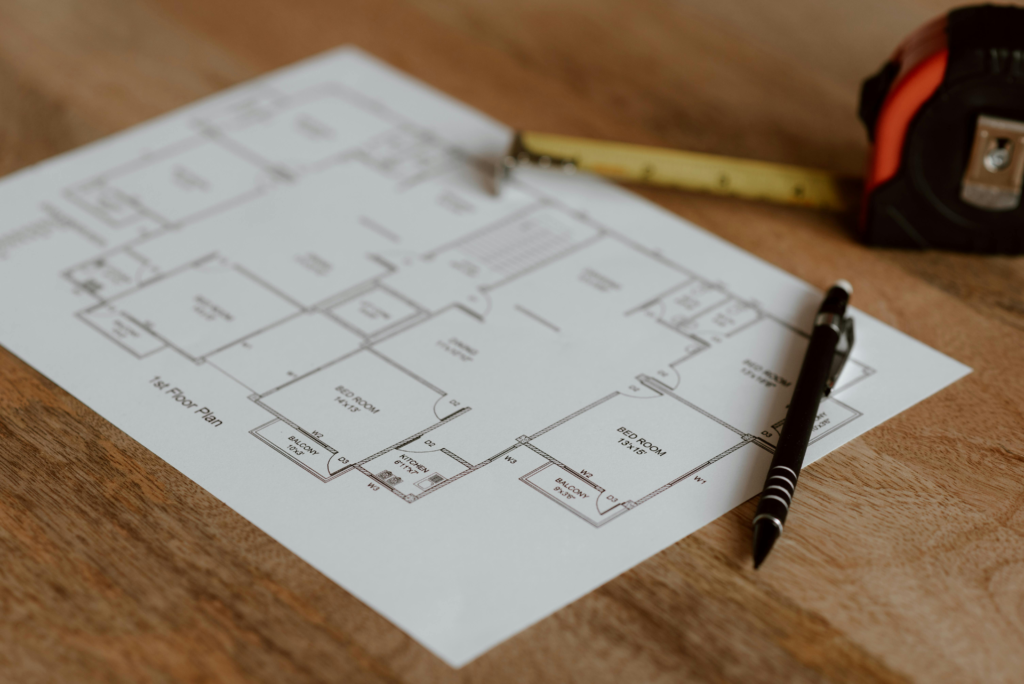
The purpose of permit drawings is for regulatory compliance. They will show that the new building complies with zoning laws, local building codes, safety standards, etc., and the applicable ordinances.
Key Characteristics of Permit Drawings:
- Focused on code compliance, not construction detail
- Include site plans, floor plans, elevations, and structural notes
- Must follow the format and standards required by the local authority having jurisdiction (AHJ)
- Are reviewed and stamped by a licensed architect or engineer
- Become public record once submitted
Are typically less detailed than construction drawings
What Are Construction Drawings?
Construction Drawings (or Working Drawings or Contract Documents) are the complete and detailed set of plans that Contractors, Subcontractors and Trades use to build the Project.
Construction Drawings show the approved Design as detailed, usable instructions for every step in the construction process.
Key Characteristics of Construction Drawings:
- Highly detailed and technical in nature
- Include dimensions, materials, specifications, schedules, and details
- Used on-site by builders, electricians, plumbers, and other trades
- Coordinated across multiple disciplines: architectural, structural, MEP (Mechanical, Electrical, Plumbing)
- May evolve and be updated throughout construction
Not always submitted to the building department
Advantages of Permit Drawings
There are many benefits to using permit drawings for the pre-construction phase of your project:
- Quickly get legal approval for your project
- Guaranteed compliance with local construction laws, codes, and regulations
- Decreased likelihood of being rejected for building permits
- Enhanced Communication Between You and Your Local Government and Building Officials
- Early Identification of Zoning and Code Issues
- An Overview of What Will Be Built
- Safer Building Practices
- Accurate Initial Cost Estimates for the Construction of the Building.
Advantages of Construction Drawings
Construction drawing are necessary for efficiently executing and managing a project.
There are several advantages of construction drawings including:
- Accurate guidance for the construction process
- Greater coordination between teams
- Less waste of materials
- Fewer mistakes on site
- Faster completion of the project
- Better estimates of costs
- Clear specifications for materials
- Improved quality control
- Easier to manage the project
- Easier communication with the contractor
Why Both Drawings Are Important
Many individuals incorrectly believe that by only providing permit type drawings, the project will be adequately constructed; however, this is not true. Permit-type drawings will only get you through the approval period, whereas construction types will provide all necessary information to start and complete the physical construction of the building.

The combination of both types of drawings will lead to:
- Faster turnaround for approval
- More accurate construction
- Fewer delays in construction
- Enhanced communication
- Fewer errors on the job site
- Better cost control.
Having both permit-type drawings and construction-type drawings as part of the overall document package will help ensure that all aspects of the project are successfully completed.
Which Drawing Set Comes First?
- Concept Design
- Permit Drawings
- Approval Process
- Construction Drawings
- Construction Execution
Permit drawings could be prepared first to get approval for your construction project, while you will wait for all your construction drawings to be finished as well as have engineering technical details complete.
What’s Included in Each Set?
Permit Drawing Sheets Typically Include:
- Cover Sheet – Project info, code references, zoning data
- Site Plan – Property boundaries, setbacks, utilities
- Floor Plans – Room layout, dimensions, egress paths
- Exterior Elevations – Building height and façade
- Basic Structural Notes – Footing depths, load paths
- Life Safety Plans – Occupancy, exit routes, fire ratings
Construction Drawing Sheets Typically Include:
- All permit drawing content, plus:
- Detailed Wall Sections – Layer-by-layer assemblies
- Interior Elevations – Cabinetry, fixtures, finishes
- Enlarged Floor Plans – Kitchens, baths, stairs
- Door & Window Schedules – Sizes, hardware, ratings
- Structural Drawings – Beams, columns, connections
- MEP Drawings – HVAC, plumbing, electrical layouts
- Finish Schedules – Materials, colors, textures
- Detail Drawings – Connections, joints, transitions
Why the Distinction Matters
Confusing permit drawings with construction drawings is one of the most common — and costly — mistakes on a construction project. Here’s why it matters in practice:
1. Submitting the wrong set to the building department
Wrong sets submitted to the permit review will waste the time of the reviewer and will cause delays in the permit approval process; the reviewer will verify code compliance but the reviewer does not verify tile patterns or outlet locations. If a contractor is given permit quality drawings instead of full construction document sets the contractor will send multiple RFIs to the general contractor causing unnecessary delays and potentially creating errors in the construction process.
2. Making changes after permit approval
While construction documentation goes beyond what was permitted initially, any change that affects code related items (structural systems, exit paths, occupancy classifications) requires the filing of a permit revision; failure to file leads to failed inspections, stop work orders and potentially required demolition of non-compliant work.
3. Contractor liability and contract administration
Building plans are a contractual document between the building contractor and the client. They specify the scope of the project, quality of materials, and extent of the work to be completed. Permit drawings do not specify those attributes; therefore, using permit drawings to establish a contract with the contractor creates uncertainty about what is included within the contractor’s scope of work, which often results in disputes and change orders.
Why should avoid Common Mistakes?
Beginning Construction Without Obtaining Permit Drawings Permit drawings typically do not contain detailed design information, which could lead to on-site confusion and result in costly construction errors. Failing to Comply with Local Building Codes All construction documents, even if they are detailed, must match previously approved permit documents and other applicable local regulations. Poor Coordination Among Teams Architectural, structural, and M.E.P. (mechanical, electrical and plumbing) drawings need to be coordinated so that issues regarding clashes between trades occur during construction. Neglecting To Update Revisions Not updating or utilizing current revisions could create inaccurate construction and cause expensive re-work.
Final Thoughts
It’s imperative to understand the distinction between drawings used for permits and drawings used when building a project. Permit drawings support permits and regulatory compliance while construction drawings provide specific instructions on how to execute a construction project accurately.
Both sets of drawings are crucial in producing a seamless, compliant, and efficient construction process. Hiring professional drafts people will help to save you time, eliminate mistakes and contribute greatly to your overall project success.
For architects, contractors, developers or homeowners; understanding the right time(s) and the right ways to utilize both types of drawings will make a significant difference for you and your project.
Frequently Asked Questions
- Can construction drawings be used for permit submission?
Technically yes — construction drawings contain all the information required for permit review and more. However, submitting them in full is often unnecessary and can slow review. Many architects produce a streamlined permit set extracted from the larger CD set.
- Do I need an architect’s stamp on both sets?
Most jurisdictions require a licensed architect’s or engineer’s stamp on permit drawings. Construction drawings used on site may also require them depending on project type and local regulations. Always verify with your local building authority.
- What happens if construction drawings differ from permit drawings?
Minor differences — such as additional detail or clarification — are usually acceptable. Substantive changes to code-related elements require a formal permit revision. The permit drawings are the approved record; deviating from them without authorization is a compliance risk.
- Are permit drawings and planning drawings the same thing?
Not always. Planning drawings (or planning permission drawings in the UK context) are submitted to obtain planning consent — focused on massing, appearance, and land use. Building permit drawings are a separate submission focused on structural safety and building code compliance. Some projects require both approvals independently.
- How detailed do permit drawings need to be?
Detail requirements vary by jurisdiction. Residential projects in smaller municipalities often require less documentation than large commercial projects in major cities. Contact your local building department early in the design process to understand exactly what’s required for your specific permit application.
